 Bedding
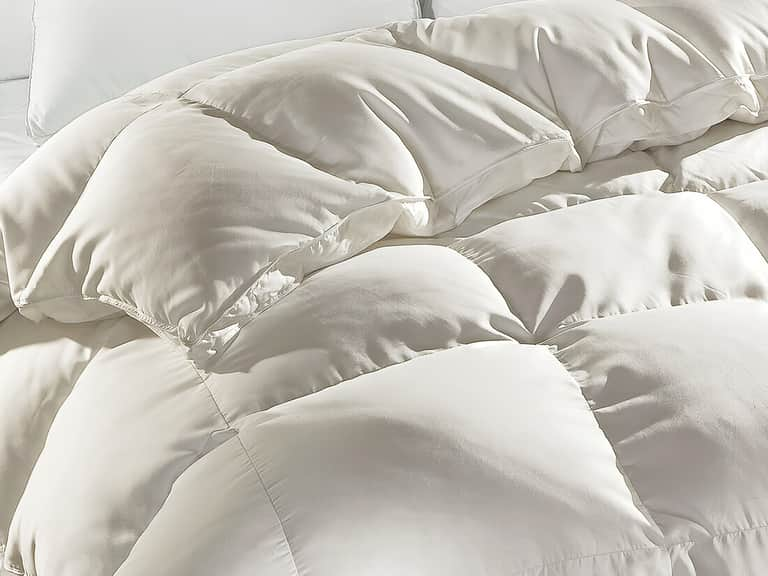
The Clean Bedroom Manhattan Goose Down Comforter
Experience cloud-like warmth with breathable Hungarian goose down, TENCEL cover, and elegant double-stitched piping for a sleep-ready, year-round comfort.
Comforters are essential bedding layers that provide warmth, insulation, and a cohesive sleeping environment. When selecting a comforter, consider fill material, warmth rating, and construction to ensure consistent loft and durability. Higher fill power often indicates greater warmth with less bulk, while synthetic fills offer hypoallergenic advantages for sensitive sleepers. keywords: bedding, organic mattresses.
The Clean Bedroom Manhattan Goose Down Comforter represents a premium option with natural insulation properties and breathable construction. Goose down delivers lightweight warmth, exceptional loft, and long-lasting loft recovery after washing. This type of fill is well-suited for year-round comfort in temperate climates and aligns with thoughtful, breathable bedroom design.
Sleep and Beyond myComforter emphasizes versatility and practical functionality in bedding. Features to note include duvet-like design ease, consistent warmth distribution, and durable stitching to prevent cold spots. Such comforters are compatible with various bed sizes and can be paired with complementary sheets and pillow arrangements for a balanced sleep surface.
Materials and care considerations influence long-term performance. Natural fills tend to require gentle cleaning and occasional fluffed maintenance to sustain loft, while synthetic alternatives offer easier care and moisture management. In a well-rounded bedroom setup, choosing a comforter that harmonizes with organic mattresses and breathable sheets supports healthier sleep.
Understanding how to evaluate comforter features—fill power, weave, fabric shell, and washability—helps align choices with nightly needs. For sensitive users, allergen-friendly options and hypoallergenic coatings can reduce irritants in the sleep environment. This category intersects with broader bedding considerations, including pillows and climate-appropriate bedding strategies.
Bedding
 Bedding